ALOCASIA LONGILOBA ‘WATSONIANA’
CULTIVAR DESCRIPTION:
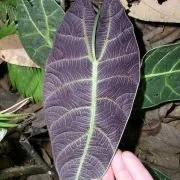
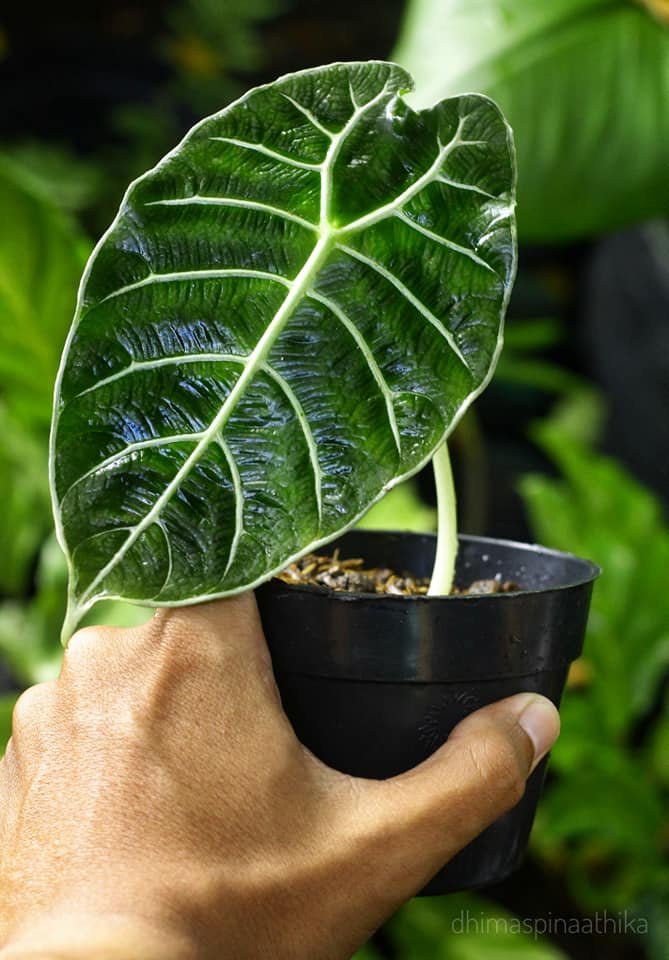
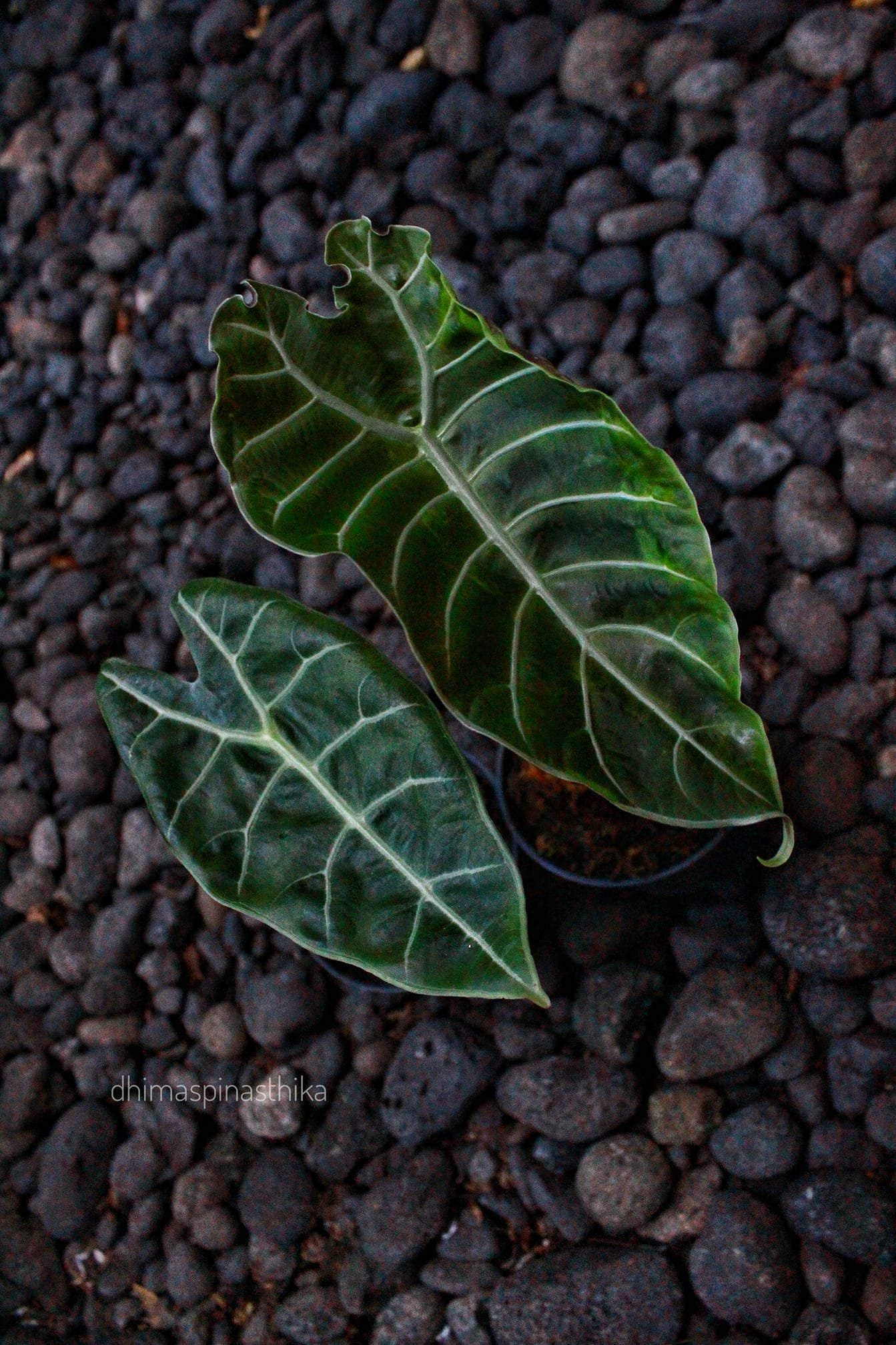
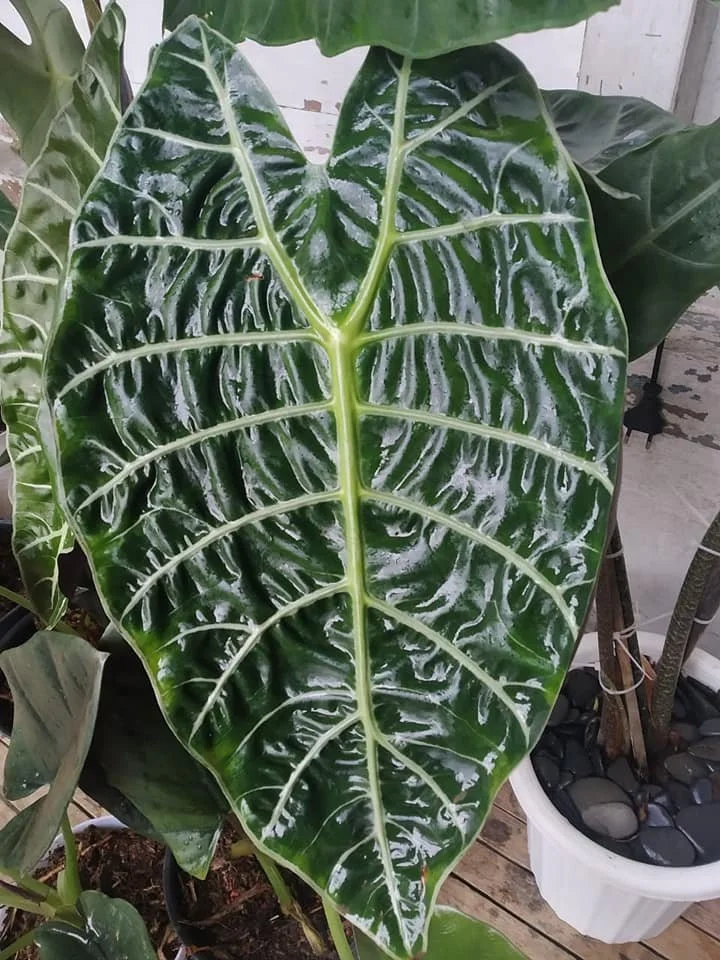
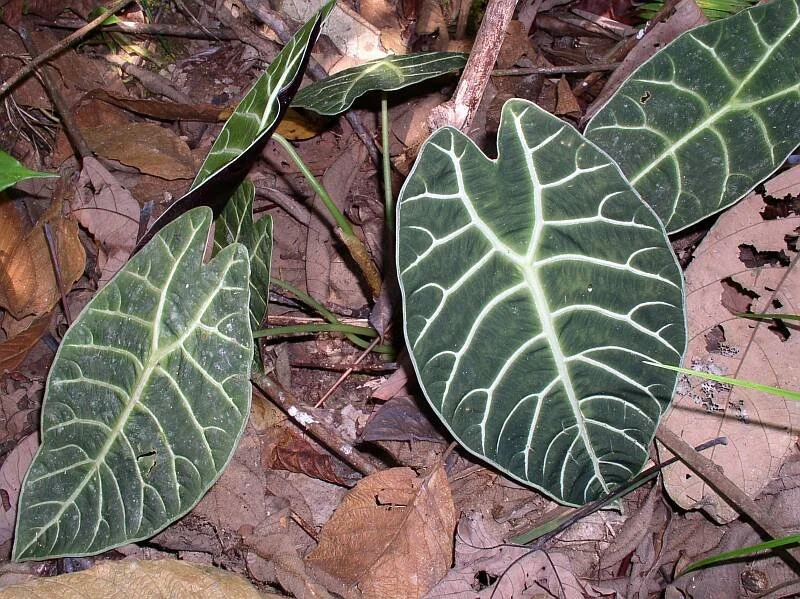
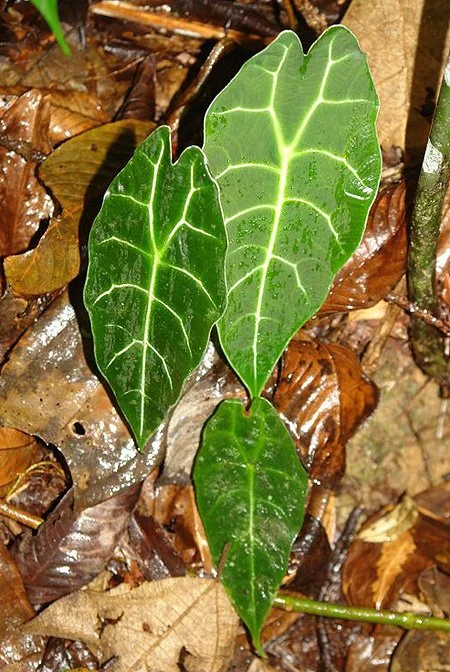
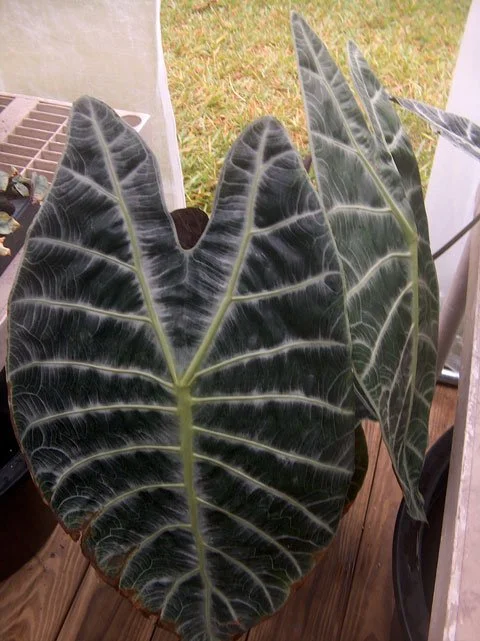
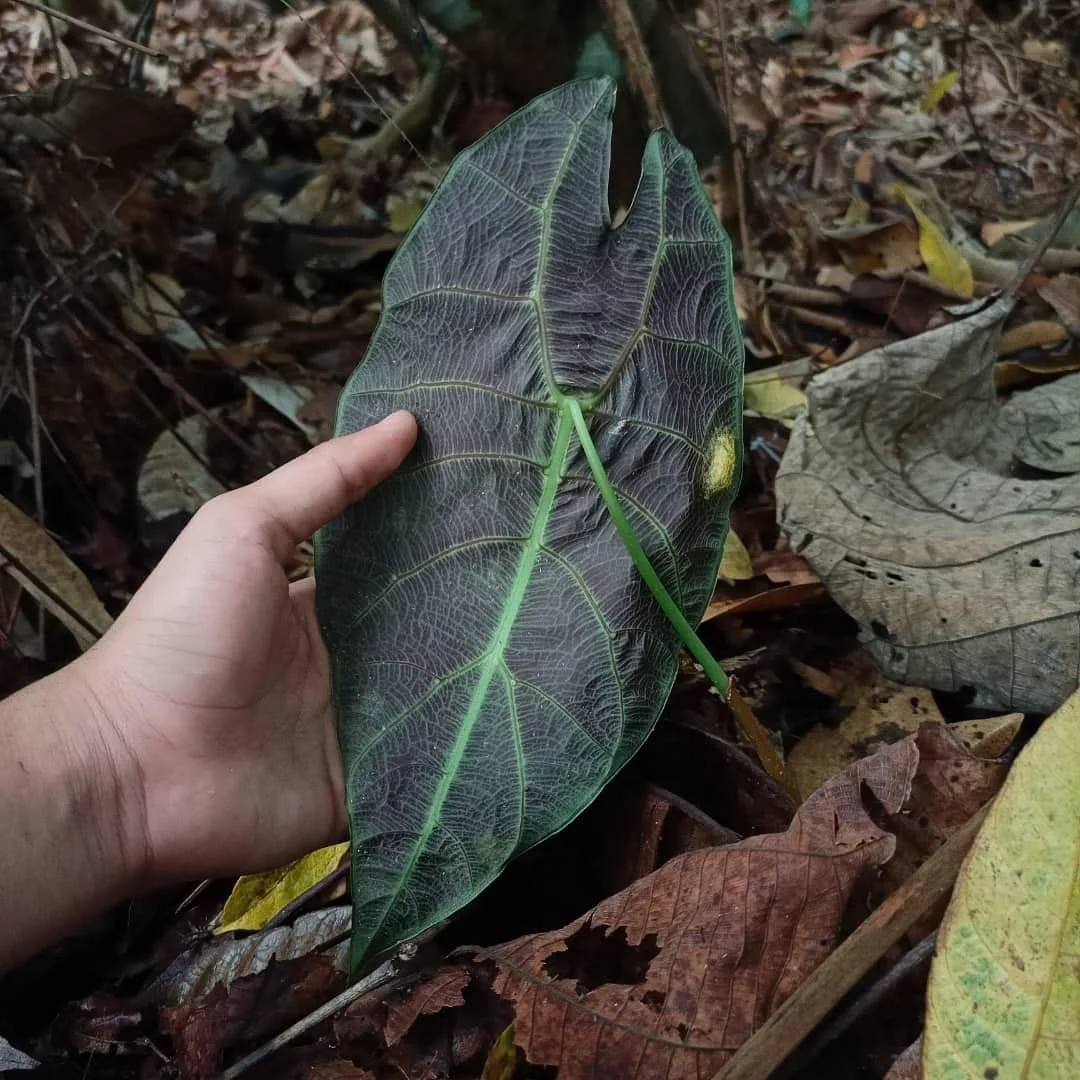
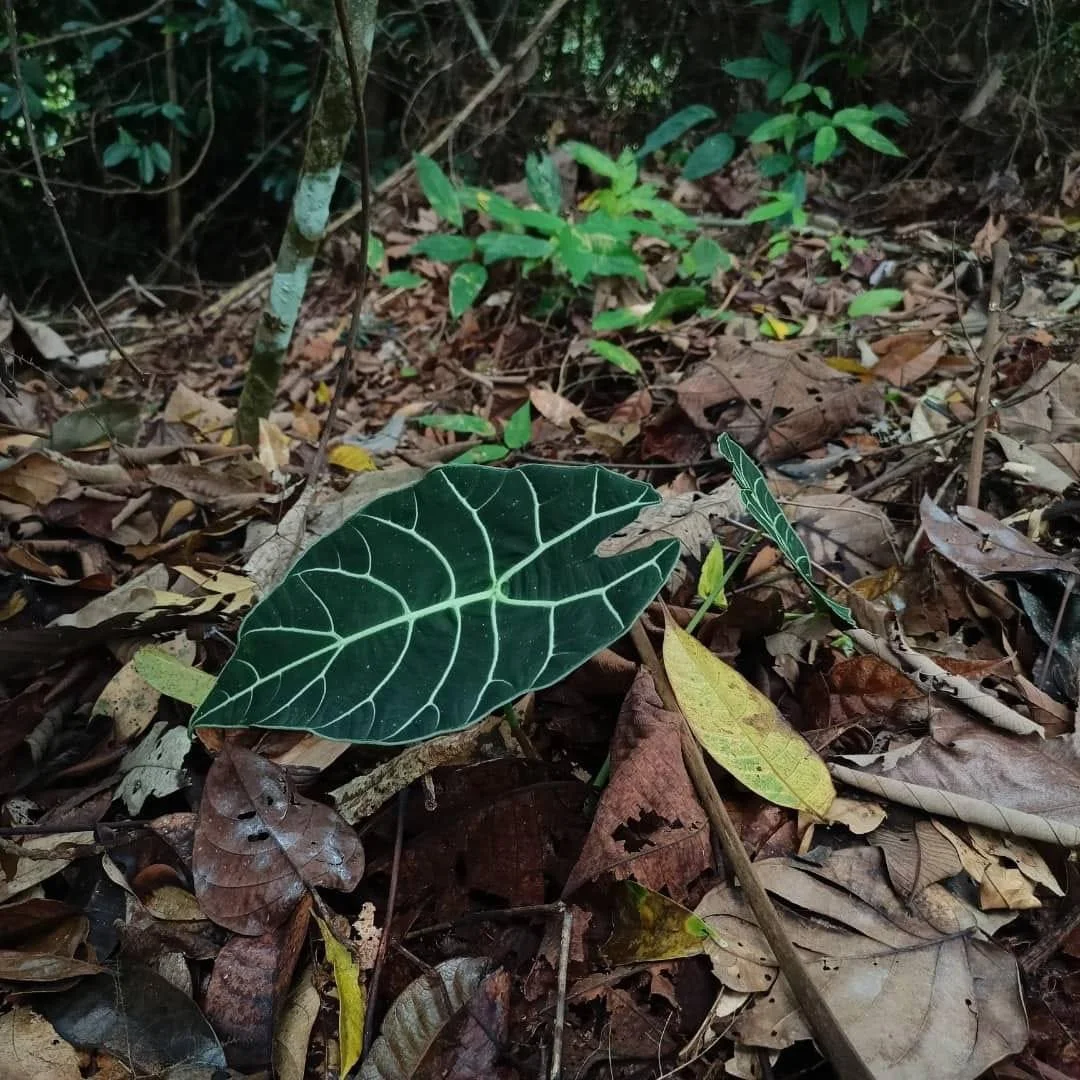
Alocasia longiloba 'Watsoniana' carries one of the most celebrated leaves in the genus: a long, shield-shaped, gently bullate blade of deep olive green, edged and veined in clean ivory-white, with a rich wine-purple underside. Mature blades reach about 20 inches on slender pinkish petioles that curve just below the blade, tipping each leaf face-forward. The original description records a detail worth checking for on your own plant: small, circular, translucent yellow spots on the underside, where the primary veins meet the midrib.²
'Watsoniana' is a named form of Alocasia longiloba, the variable species that also absorbed Alocasia lowii and Alocasia korthalsii.¹ Its closest counterpart within the species is 'Putzeysii', which differs in its curved primary veins and mostly forest-floor habit — 'Watsoniana' tends to grow on rock in the wild — and the two intergrade where their ranges meet, so the boundary is honest guesswork rather than a hard line.⁶ A blue-cast clone with less silver around the midrib has circulated as 'Caerulea'.⁷ Plants are still widely sold under the old species name Alocasia watsoniana.¹
STORY:
STORY TITLE: The plant whose type is a picture
'Watsoniana' debuted in April 1893, when F. Sander & Co. of St. Albans staged it at the Ghent Quinquennial exhibition among a set of certificated novelties that included Dracaena sanderiana and Strobilanthes dyerianus.⁴ Maxwell Masters described it that same month in The Gardeners' Chronicle as Alocasia watsoniana, a "handsome stove Aroid from Sumatra" raised from Sander's stock.² Kew logged it among the new garden plants of the year, crediting the same firm and the same island.⁵
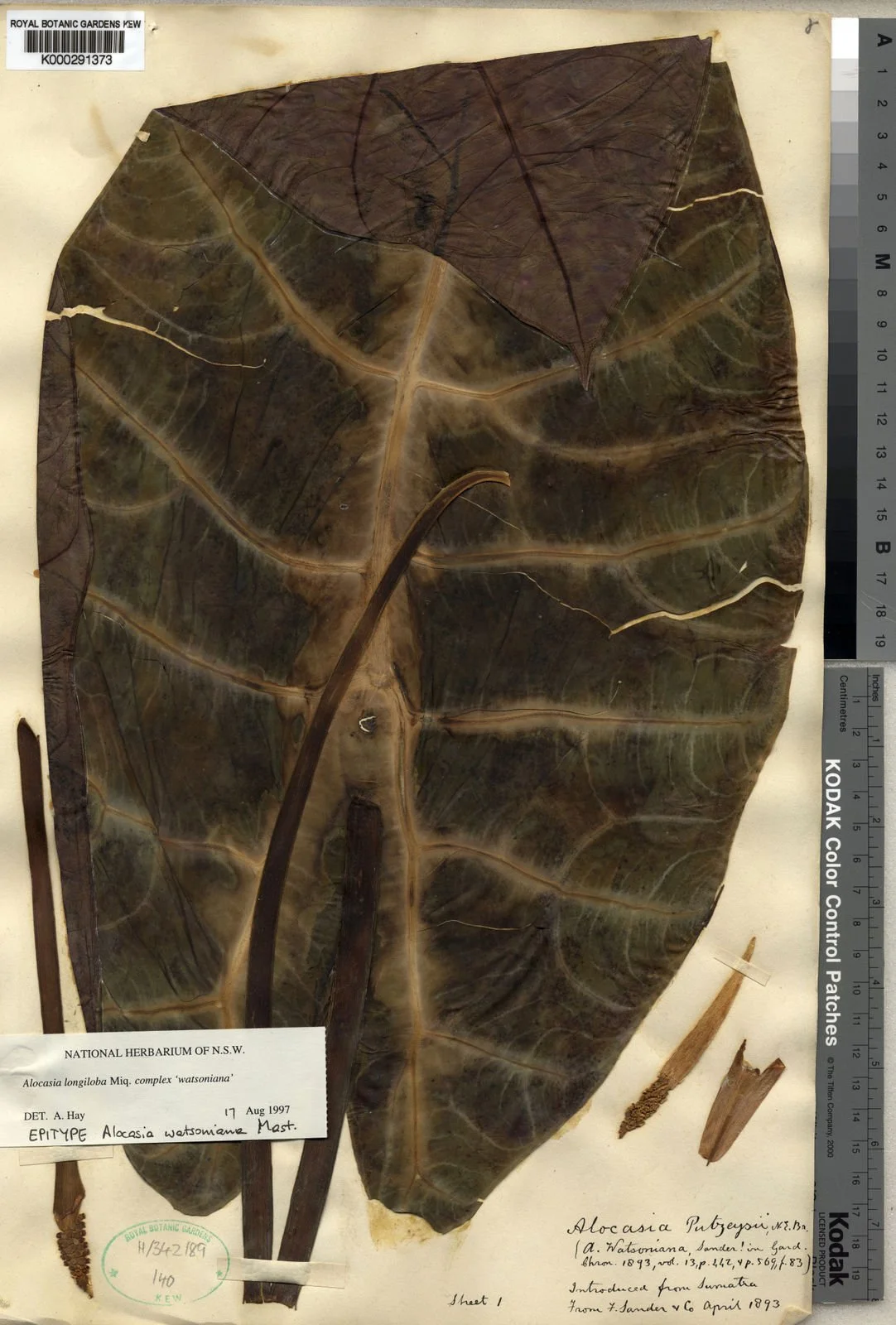
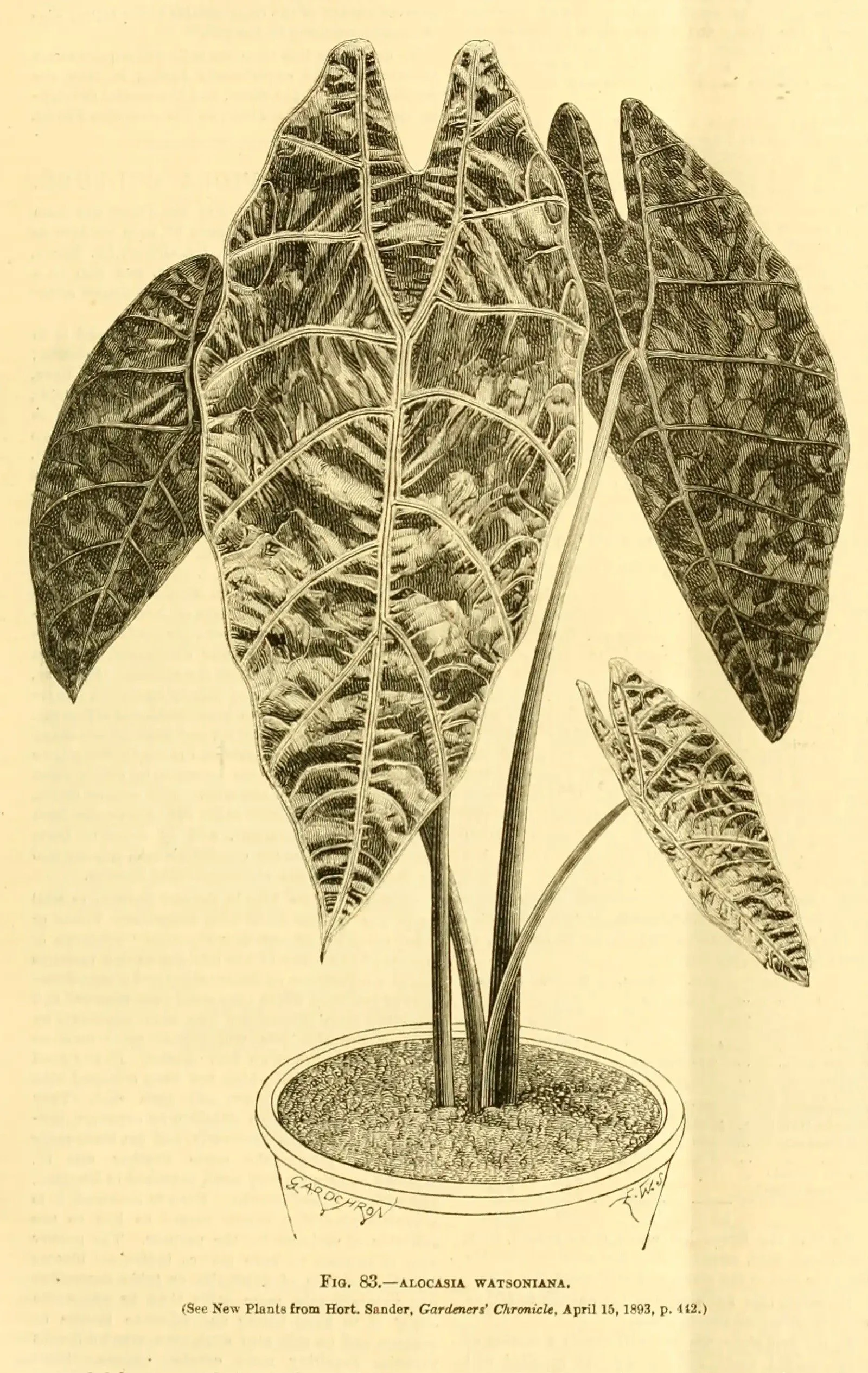
The name rests on a picture rather than a pressed plant: the wood engraving the Chronicle published a month after the description serves as the nomenclatural type of Alocasia watsoniana, later anchored to a Kew specimen preserved from the same Sander stock.⁶ The engraved block itself crossed the Channel within weeks and was reprinted in the Revue de l'Horticulture Belge, whose reviewer likened the blade to "the targe, the shield of the old Saxon archers."⁴
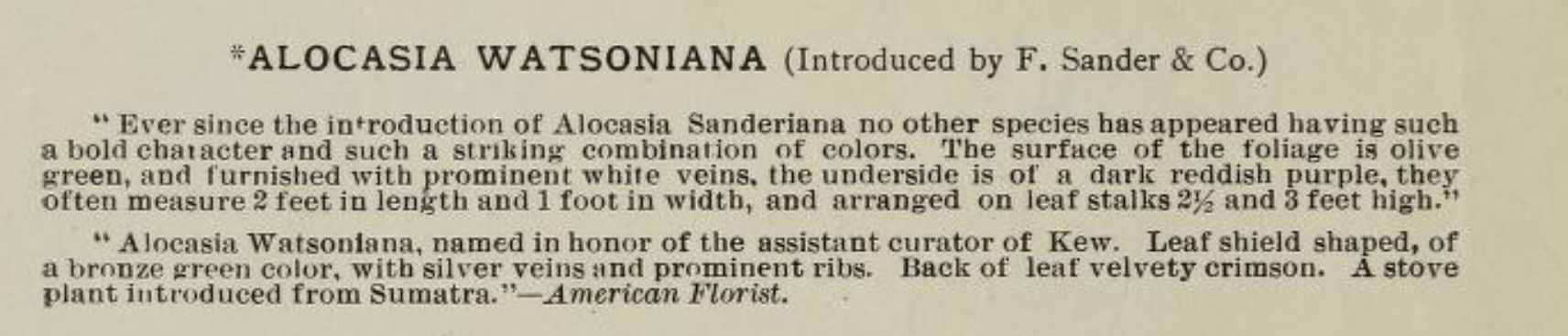
A tradition dating to the 1980s has Sander introducing the plant from Java around 1880.⁷ The period record reads otherwise: the 1893 accounts uniformly give Sumatra, and the name appears in no catalog or journal before the Ghent season.²
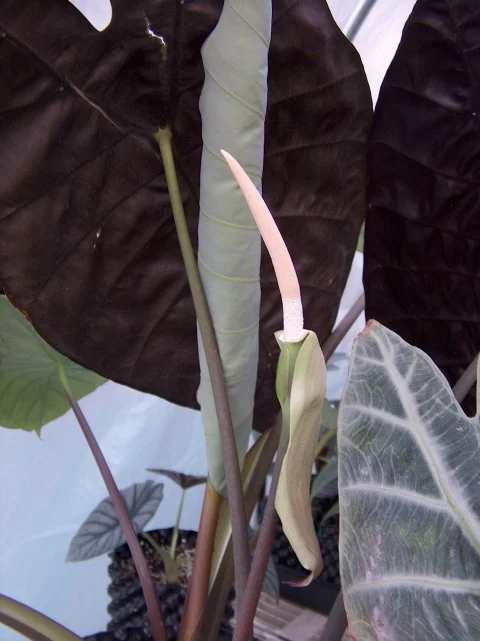
The plant became a fixture of fine hothouse collections, shown into the Edwardian years and used as a parent in mid-century American crosses. Writing in 1984, David Burnett still called it "this magnificent species… relatively plentiful in collections," while noting that it seldom flowers and rarely produces corms.⁷ In 1998 Alistair Hay placed Alocasia watsoniana within Alocasia longiloba, retaining 'watsoniana' as an informal designation for this straight-veined, rock-dwelling form.⁶
/STORY
ORIGINAL DESCRIPTION: Masters, M.T., The Gardeners' Chronicle, ser. 3, 13: 442 (15 April 1893), as Alocasia watsoniana.
REFERENCES:
1. Plants of the World Online, Royal Botanic Gardens, Kew — Alocasia longiloba Miq.
3. The Gardeners' Chronicle, ser. 3, 13: 569, fig. 83. 1893.
4. Revue de l'Horticulture Belge et Étrangère 19: 115, 168–169, fig. 36. 1893.
7. Burnett, D. 1984. The cultivated Alocasia. Aroideana 7(3–4): 68–162
8. The American Florist 8: 1279. 1893
9. John Saul's Descriptive Catalogue no. 6 for 1894, Supplement: 2. Washington, D.C.
Photo by Dhimas Pinasthika